Why Your Air Purifier Should Be Built Like a Water Filter

When people think about filtration, water filters are often easier to understand than air purifiers.
You wouldn’t want drinking water to simply flow around the filter cartridge instead of through it. And if you were trying to remove chemicals, tastes or odours from water, you would probably expect the filter to contain a meaningful amount of activated carbon—not just a thin decorative layer.
The same principles should apply to the air you breathe.
A well-designed air purifier should force contaminated air through its filtration media, use enough filtration material to actually do the job, and minimise opportunities for unfiltered air to bypass the filters.
In other words, your air purifier should be designed more like a serious water filtration system.
1. Filtration only works if the air goes through the filter
This sounds obvious, but it is one of the most important principles in air purification. For a filter to remove particles, gases or odours from the air, the air needs to pass through the filtration media.
If gaps exist around the filter, between filter stages, or between the filter and the purifier housing, some air can take the path of least resistance and flow around the filter instead.
This is known as filter bypass.
Imagine installing a high-quality water filter under your kitchen sink, but allowing some of the incoming water to flow around the cartridge and straight to the tap. Even if the filter itself performed extremely well, the final result would be compromised.
Air filtration is no different.
A properly engineered air purifier should be designed so that the airflow is sealed and directed through the filter media—not around it.
That means the fit, seals, filter construction and purifier housing are just as important as the filtration media itself.
2. Activated carbon needs volume to work effectively
Many air purifiers advertise activated carbon filtration.
But not all carbon filters are created equal.
Some air purifiers use a very thin layer of carbon, a lightweight carbon sheet or a small amount of carbon bonded to another filter.
That may provide some odour reduction, but when it comes to removing gaseous pollutants, volatile organic compounds and persistent smells, the amount of activated carbon matters.
Activated carbon works through a process called adsorption. Pollutant molecules attach to the enormous internal surface area within the carbon.
The more suitable activated carbon there is, the more adsorption capacity the filter can potentially provide.
It is similar to a water filter designed to reduce chlorine, chemicals or unwanted tastes. A tiny sprinkle of carbon is unlikely to provide the same capacity as a deep bed containing a substantial volume of carbon.
The same logic applies to air purification.
If reducing odours, smoke and gaseous pollutants is important, look beyond the words “activated carbon filter” and ask a more useful question:
How much activated carbon is actually inside the purifier?
3. A deep carbon bed gives polluted air more opportunity to be filtered
Quantity is important, but the way carbon is used also matters.
A substantial bed of activated carbon creates greater contact between the contaminated air and the carbon media as the air travels through the purifier. That contact time is important because gases need an opportunity to interact with the carbon surface.
Think again about water filtration.
If contaminated water moved almost instantly across an extremely thin layer of carbon, there would be limited opportunity for adsorption. Passing the water through a deeper, properly designed carbon filter provides much greater contact with the filtration media.
Air purification follows the same basic principle.
This is why serious gas and odour filtration generally requires more than a thin carbon-coated sheet.
4. HEPA performance can also be undermined by bypass
Bypass is not only a problem for carbon filtration, but the same issue applies to particle filtration.
A high-efficiency particle filter can be extremely effective at capturing fine airborne particles—but only for the air that actually passes through it.
If air can leak around the filter, the purifier may circulate a mixture of filtered and unfiltered air back into the room. A good purifier therefore needs more than impressive filter specifications.
The entire airflow system needs to be engineered around those filters. That includes:
- accurately fitted filters
- effective seals
- a rigid purifier housing
- controlled airflow paths
- minimal gaps around filter edges
The goal should be simple: air enters the purifier, passes through the filtration system, and then returns to the room.
5. Bigger filters can offer practical advantages
Larger filters are not automatically better, but there are good reasons why substantial filtration systems often use more filter media.
More particle-filter media can provide greater surface area. More activated carbon can provide greater adsorption capacity.
And larger, deeper filtration stages can allow a purifier to balance filtration performance, airflow and filter life more effectively.
This is another area where air purifiers can learn from water filtration.
Serious filtration systems tend to use cartridges sized for the job rather than trying to achieve everything with the thinnest possible filter. When evaluating an air purifier, it is worth looking inside the unit rather than judging it solely by its exterior dimensions or marketing claims.
6. Air purification is a system, not just a filter
The best air purifiers should be thought of as complete filtration systems. A good filter placed inside a poorly sealed purifier can still deliver poor real-world performance.
Likewise, a purifier with impressive airflow figures but very little carbon may move plenty of air while providing limited capacity for gaseous pollutants and odours.
Effective air purification requires the different components to work together:
Particle filtration for airborne particles such as dust, pollen, smoke particles and other fine particulate matter.
- Activated carbon filtration for many gases, VOCs and odours.
- Sealed construction to help prevent contaminated air from bypassing the filters.
- Appropriate airflow to move room air through the filtration system effectively.
- The filtration media matters—but so does everything that directs the air through it.
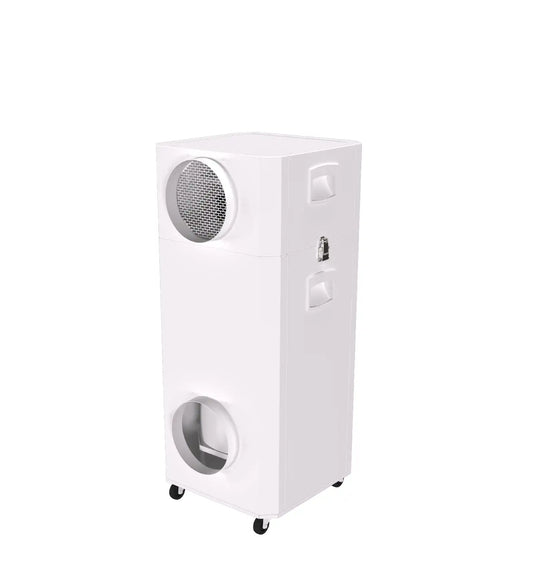
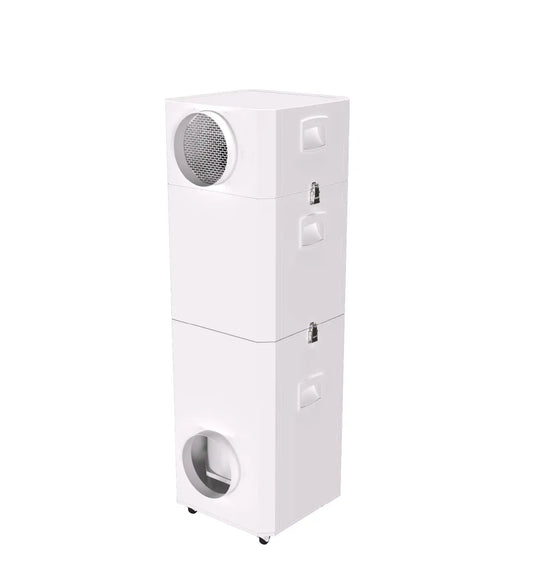
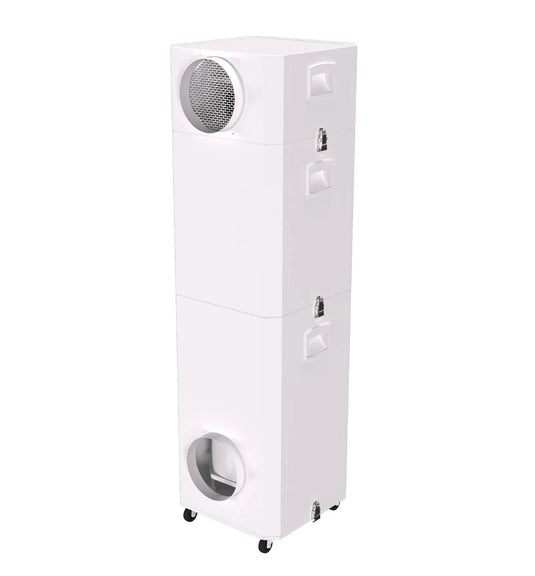
Why INOVA uses larger filters
At INOVA, we believe filtration should be designed around the contaminant you are trying to remove.
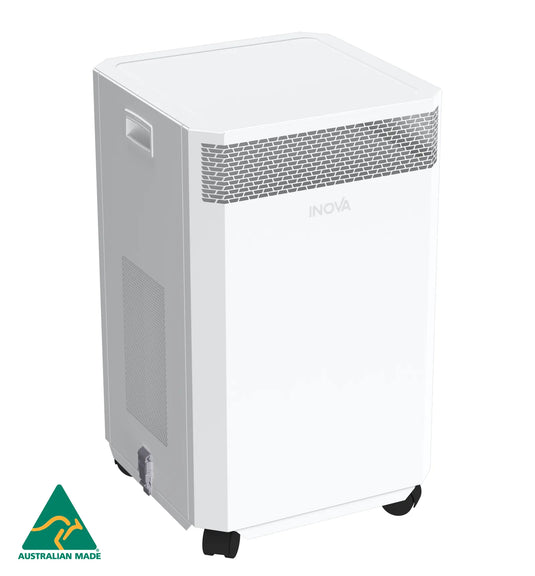
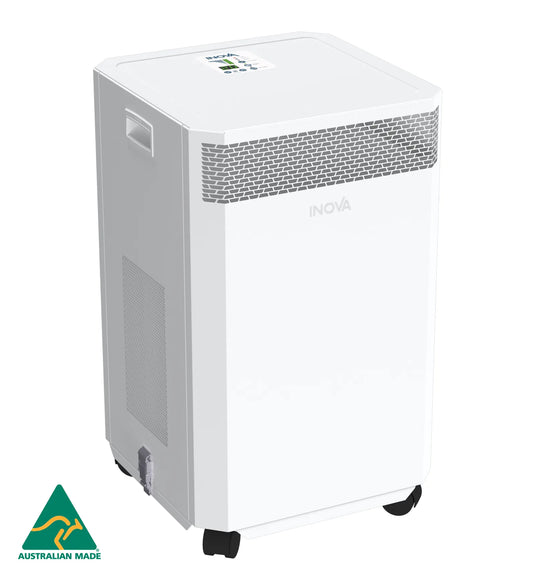
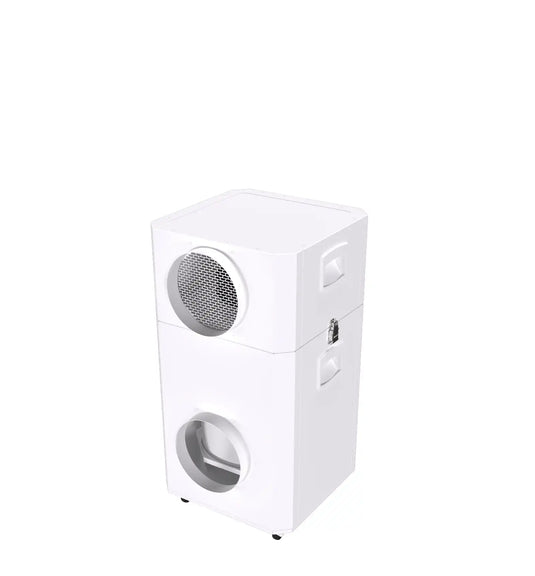
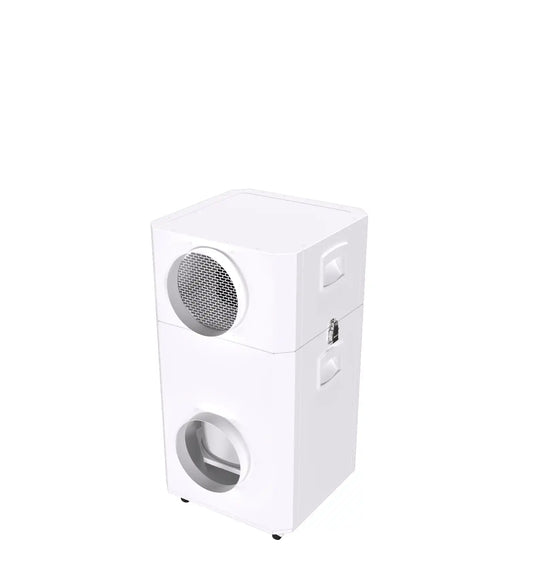
That is why our Core Plus, E20 and DE20 air purifiers use substantial filtration systems rather than relying on thin, lightweight filter cartridges.
INOVA purifiers are designed to combine high-efficiency particle filtration with kilograms of activated carbon filtration, while directing airflow through the filters rather than allowing it to simply leak around them.
It is a straightforward philosophy:
Use enough filtration media, seal it properly, and make sure the air actually passes through it.
It is the same principle you would expect from a quality water filtration system.
And when it comes to the air your family breathes every day, it makes just as much sense.