How Toxic Is Bushfire Smoke? The Hidden Dangers in the Air We Breathe

For Australians, bushfire smoke is an all-too-familiar part of summer. The smell of burning vegetation, hazy skies and reduced visibility are unmistakable signs that fires are affecting air quality.
But what many people don't realise is that bushfire smoke is far more than burnt wood and ash. It is a complex mixture of microscopic particles, toxic gases and potentially harmful chemicals that can affect our health, even when fires are hundreds of kilometres away.
And depending on what is burning, the chemical composition of that smoke can become even more concerning.
So, just how toxic is bushfire smoke, and what happens when we breathe it in?
Bushfire Smoke Is a Chemical Cocktail
When vegetation burns, it releases a mixture of airborne pollutants. While the visible smoke and ash are the most obvious signs of a fire, some of the most harmful substances are invisible.
Bushfire smoke can contain:
- Fine particulate matter (PM2.5): Microscopic particles that can penetrate deep into the lungs and contribute to cardiovascular and respiratory problems.
- Benzene: A toxic chemical classified as a human carcinogen, which can be released during the combustion of organic materials.
- Formaldehyde: A chemical that can irritate the eyes and respiratory system and is also classified as a human carcinogen.
- Acrolein: A particularly irritating chemical that can cause inflammation of the eyes, nose, throat and lungs.
- Polycyclic aromatic hydrocarbons (PAHs): Compounds formed during incomplete combustion, some of which are known to cause cancer.
- Carbon monoxide and other gases: Combustion by-products that can pose additional health risks, particularly at high concentrations.
The exact mixture and concentrations depend on the materials burning, fire intensity, combustion conditions and distance from the fire.
According to the US Environmental Protection Agency (EPA), wood smoke contains several hazardous pollutants, including benzene, formaldehyde, acrolein and PAHs.
This means that the smoke drifting through your neighbourhood is not simply an unpleasant smell. It can represent exposure to a complex mixture of substances with very different health effects.
When Bushfires Burn Buildings, the Smoke Can Become Even More Hazardous
Australian bushfires don't always remain confined to forests and grasslands.
When fires reach residential areas, they can consume houses, vehicles, sheds, fencing, electrical equipment and other manufactured materials.
Unlike natural vegetation, these materials can contain plastics, paints, insulation, wiring, treated timber and metals.
When burned, they can release additional hazardous substances into the smoke plume.
Research by the US EPA has identified elevated concentrations of potentially harmful metals, including lead, copper and zinc, in smoke associated with fires that destroyed buildings.
The research also found that fires involving manufactured structures can produce substantially different emissions from fires burning natural vegetation alone.
What burns matters just as much as how much smoke is produced.
A bushfire that destroys homes and vehicles can therefore create a more chemically complex pollution mixture than a fire burning vegetation alone.
For communities downwind, this highlights an often-overlooked risk: the smoke reaching their homes may contain pollutants originating from much more than trees and grass.
The Health Risks Go Beyond Your Lungs
Most people associate bushfire smoke with coughing, irritated eyes, a sore throat or difficulty breathing.
These are common symptoms, but the potential health consequences extend much further.
One of the biggest concerns is PM2.5, particulate matter measuring 2.5 micrometres or less in diameter.
These particles are small enough to travel deep into the lungs, where they can trigger inflammation and contribute to wider effects throughout the body.
Research has linked exposure to fine particle pollution with worsening asthma, reduced lung function and increased risks of serious cardiovascular events, including heart attacks and strokes.
The effects are particularly concerning for children, older Australians, pregnant women and people living with existing heart or respiratory conditions.
However, otherwise healthy adults can also experience adverse effects, especially during prolonged or intense smoke events.
The Australian Bushfire Health Toll
The health impact of bushfire smoke became especially apparent during Australia's devastating 2019–2020 Black Summer.
Research published in the Medical Journal of Australia estimated that bushfire smoke exposure across eastern Australia was associated with:
- 417 excess deaths
- 1,124 cardiovascular hospitalisations
- 2,027 respiratory hospitalisations
- 1,305 emergency department presentations for asthma
These are statistical estimates of the population-wide health burden, rather than individually confirmed cases.
Nevertheless, they demonstrate that bushfire smoke is a serious public health issue, not simply a temporary inconvenience.
The danger isn't limited to those fighting fires or living near the flames. Air pollution can affect entire communities far from the fire front.
You Don't Have to See Thick Smoke to Be Exposed
One of the more concerning aspects of bushfire smoke is that its most harmful components are not necessarily visible. Fine particles can remain suspended in the atmosphere and enter buildings through ventilation systems, gaps around windows and doors, and other small openings.
Even when the outdoor haze begins to clear, elevated concentrations of fine particles may still be present.
Likewise, the strength of a smoky smell does not provide a reliable measurement of PM2.5 exposure. Different pollutants have different odour characteristics, and some hazardous gases are odourless.
That's why relying on what you can see or smell isn't enough.
Checking official air quality monitoring information provides a more useful indication of outdoor pollution levels and whether additional precautions are necessary.
Can Bushfire Smoke Make Indoor Air Toxic?
It is easy to assume that closing the doors and windows will completely protect your family from bushfire smoke.
Unfortunately, most homes are not airtight. Fine particles and gaseous pollutants can infiltrate indoor spaces, potentially exposing occupants over extended periods.
During major smoke events, this can become particularly concerning when families spend longer periods indoors to avoid the polluted outdoor air. Reducing exposure should therefore involve more than simply shutting the windows.
NSW Health recommends keeping windows and doors closed when outdoor air quality is poor, using air conditioning on recirculate where possible and avoiding indoor pollution sources such as candles and incense.
A correctly sized air purifier equipped with HEPA filtration can also help reduce the concentration of airborne smoke particles indoors.
However, particulate filtration alone does not address the full chemical mixture.
Why Both HEPA and Activated Carbon Filtration Matter
Because bushfire smoke contains both particles and gases, different filtration technologies serve different purposes.
- HEPA filtration is designed to capture fine airborne particles, including PM2.5, as air passes through the filter.
- Activated carbon filtration can help adsorb certain gaseous pollutants, volatile organic compounds (VOCs) and smoke-related odours.
The effectiveness of activated carbon depends on factors including the type and quantity of carbon, filter design, airflow and the particular chemicals present.
Importantly, no residential air purifier can eliminate every pollutant or make a home safe during a dangerous fire emergency. Carbon monoxide, for example, is not readily removed by conventional residential filtration systems.
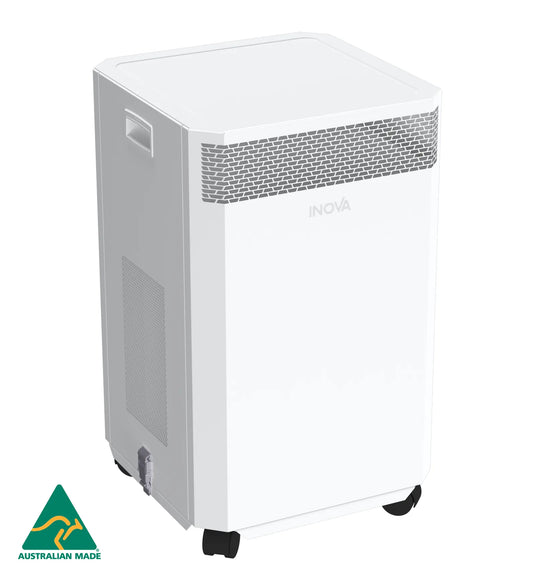
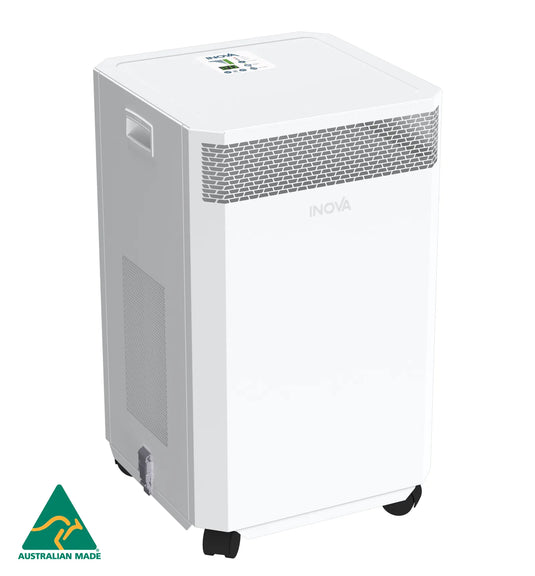
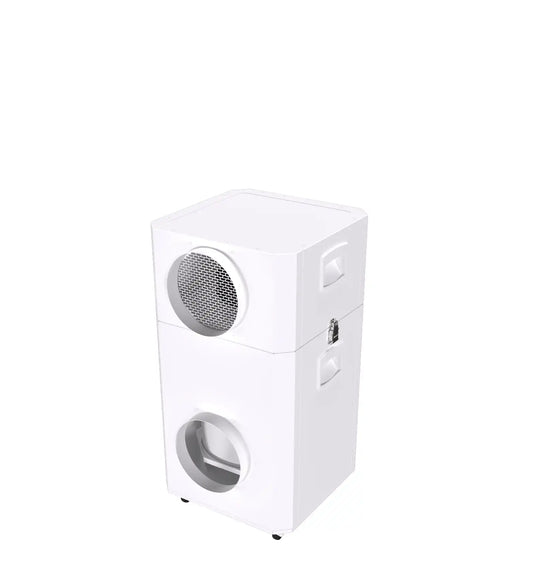
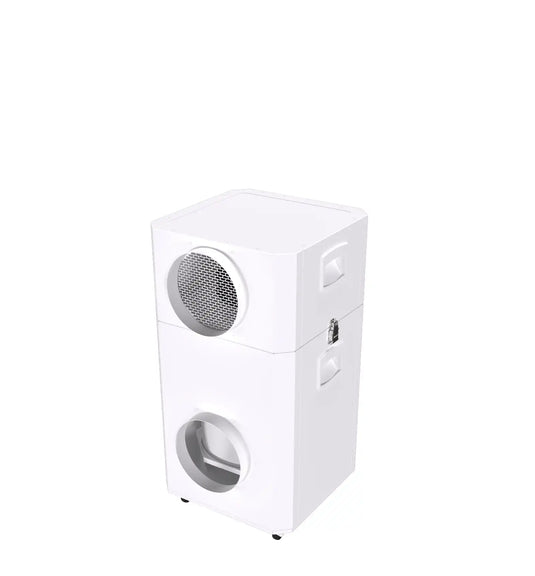
At INOVA Air Purifiers, we understand that effective smoke filtration requires more than a basic particle filter.
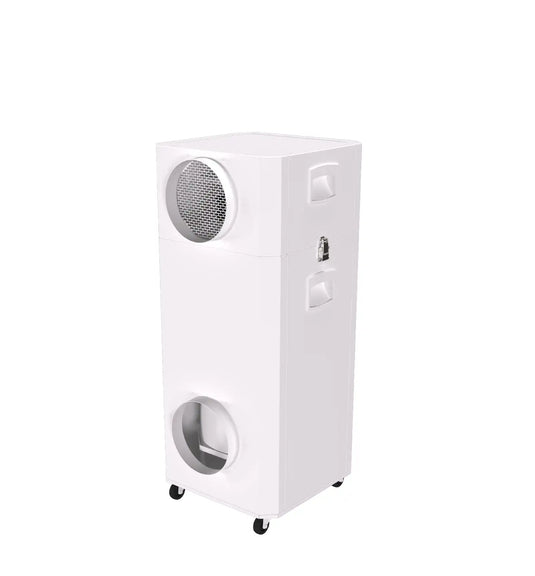
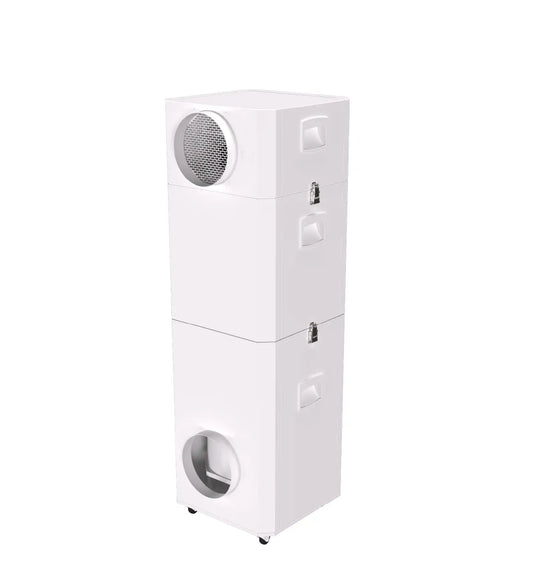
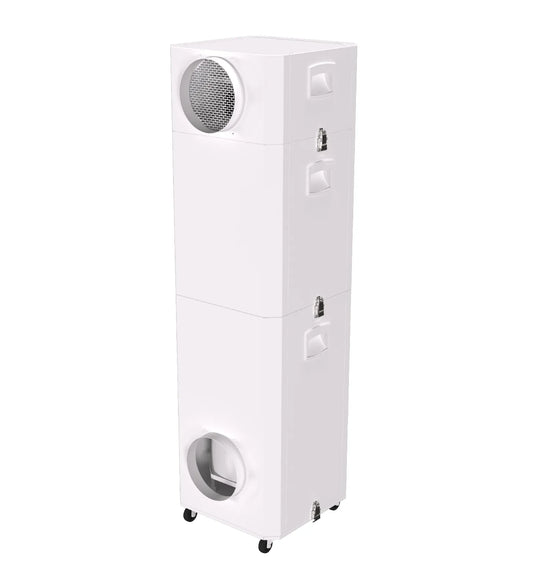
Our Australian-made air purifiers feature high-efficiency H13 HEPA filtration, while selected models also incorporate substantial, high-capacity, activated carbon filters designed to help reduce certain gaseous pollutants, chemicals and odours.
This combination provides a practical way to help reduce indoor exposure to different components of bushfire smoke.
Take Bushfire Smoke Seriously Before the Next Fire Season
Bushfire smoke is not simply an unpleasant side effect of Australia's summer fire season.
It is a complex form of air pollution that can contain fine particles, hazardous gases, toxic organic compounds and, when buildings burn, additional contaminants from manufactured materials.
While the precise health risks vary with pollutant concentrations and the duration of exposure, the scientific evidence makes one thing clear: reducing exposure matters.
Understanding what is in bushfire smoke is the first step towards taking meaningful action.
Monitor local air quality, follow emergency warnings, minimise exposure during smoke events and take practical steps to maintain cleaner indoor air.
Because when bushfire smoke fills the sky, protecting the air inside your home is an important part of protecting your health.
Help Protect Your Indoor Air This Bushfire Season
INOVA Air Purifiers combine high-efficiency particle filtration with advanced filtration options for smoke-related gases, chemicals and odours.
Explore INOVA Air Purifiers designed for bushfire smoke and discover a solution suited to your home.
Sources and Further Reading