Mould VOCs (MVOCs): The Hidden Air Pollutants and How Air Purifiers Can Help

When most people think about mould in their home, they picture unsightly black or green patches on walls, ceilings or bathroom tiles. But mould can also affect indoor air quality in ways that aren't immediately visible.
Beyond releasing airborne spores, mould produces gases known as Microbial Volatile Organic Compounds (MVOCs). These compounds are often responsible for the distinctive musty smell associated with damp or mould-affected buildings.
While addressing the source of mould is essential, an air purifier equipped with high-efficiency HEPA and high-capacity activated carbon filtration can play an important role in reducing airborne mould contaminants, including MVOCs.
What Are Microbial Volatile Organic Compounds (MVOCs)?
Microbial Volatile Organic Compounds, commonly referred to as MVOCs, are chemicals released into the air by microorganisms, including certain moulds and bacteria, during their growth and metabolic processes.
Unlike conventional Volatile Organic Compounds (VOCs), which are often associated with paints, cleaning products, adhesives and furniture, MVOCs originate from microbial activity.
These compounds are particularly common in environments affected by moisture, water damage or poor ventilation.
Some MVOCs produce strong, distinctive odours, often described as:
-
Musty or earthy smells
-
Damp, stale or mouldy odours
-
Unpleasant smells associated with water-damaged materials
One of the challenges with MVOCs is that they can be released by mould growing in concealed locations, such as behind walls, beneath flooring or inside building cavities.
A persistent musty smell may therefore be an early warning sign of a hidden moisture or mould problem, even when no visible mould is present.
However, not all mould produces a noticeable smell, and the absence of an odour does not guarantee that an indoor environment is mould-free.
Are MVOCs Harmful to Your Health?
Mould and dampness are recognised indoor air quality concerns, particularly for people with asthma, allergies or respiratory sensitivities.
Research into the specific health effects of MVOCs is still developing. The US Environmental Protection Agency (EPA) notes that exposure to MVOCs has been associated with symptoms including:
-
Headaches
-
Nasal irritation
-
Dizziness
-
Fatigue
-
Nausea
However, the long-term health effects of typical indoor MVOC exposure are not yet well understood, and further research is needed to establish clear relationships between exposure levels and health outcomes.
It is also important to distinguish between MVOCs and mould spores.
Mould spores are airborne particles, while MVOCs are gaseous compounds. This distinction matters because each requires a different filtration approach.
Why HEPA Filtration Alone Isn't Enough for MVOCs
HEPA filtration is highly effective at capturing airborne particles, including mould spores, dust, pollen and other allergens.
However, MVOCs behave differently.
Because MVOCs are gases rather than particles, they can pass through a conventional HEPA filter. Even a high-quality HEPA air purifier may therefore have limited effectiveness against musty odours and gaseous pollutants unless it incorporates additional filtration technology.
This is where activated carbon filtration becomes particularly important.
The Role of Activated Carbon in Removing MVOCs
Activated carbon is a highly porous filtration material designed to capture certain gases, chemicals and odour-causing molecules from the air.
It works through a process called adsorption, where gas molecules adhere to the extensive internal surface area of the carbon as air passes through the filter.
For households experiencing musty odours associated with mould, activated carbon filtration can help reduce certain airborne MVOCs and other odour-causing compounds.
However, not all activated carbon air purifiers offer the same performance.
The effectiveness of carbon filtration depends on several factors, including:
-
Carbon capacity: A larger quantity of suitable activated carbon generally provides greater potential adsorption capacity.
-
Contact time: The amount of time contaminated air spends passing through the carbon affects pollutant capture.
-
Carbon composition: Different types of activated carbon are better suited to capturing different chemical compounds.
-
Filter condition: Activated carbon has a finite capacity and must eventually be replaced.
Many household air purifiers contain only a thin carbon coating or lightweight carbon sheet, which may provide limited capacity for persistent gaseous pollutants.
For more demanding air quality applications, a substantial bed of activated carbon is an important feature to consider.
How INOVA Air Purifiers Help Reduce MVOCs and Mould Spores
At INOVA, we understand that improving indoor air quality requires addressing both airborne particles and gaseous pollutants.
That's why our air purification systems are available with a combination of high-efficiency H13 HEPA filtration and high-capacity activated carbon filters.
1. H13 HEPA Filtration – Capturing Airborne Mould Spores
INOVA's medical-grade H13 HEPA filters are designed to capture microscopic airborne particles, including mould spores and fragments, as air circulates through the purifier.
This helps reduce the concentration of airborne particles that may contribute to respiratory irritation or allergic reactions.
2. High-Capacity Activated Carbon – Targeting MVOCs
INOVA offers substantial activated carbon filtration for environments where VOCs, chemicals and persistent odours are a concern.
For example:
-
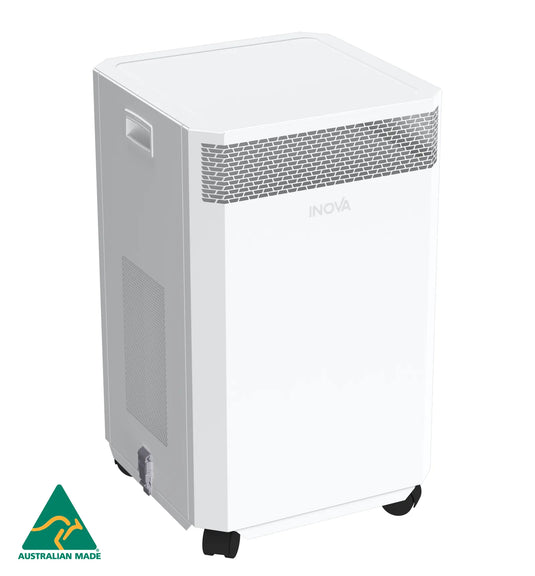
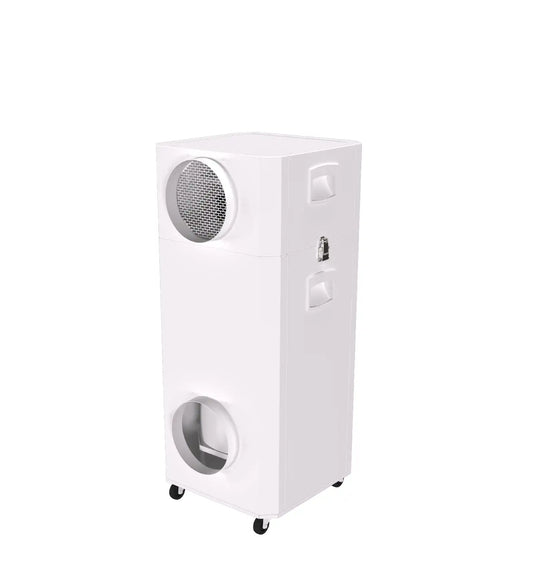
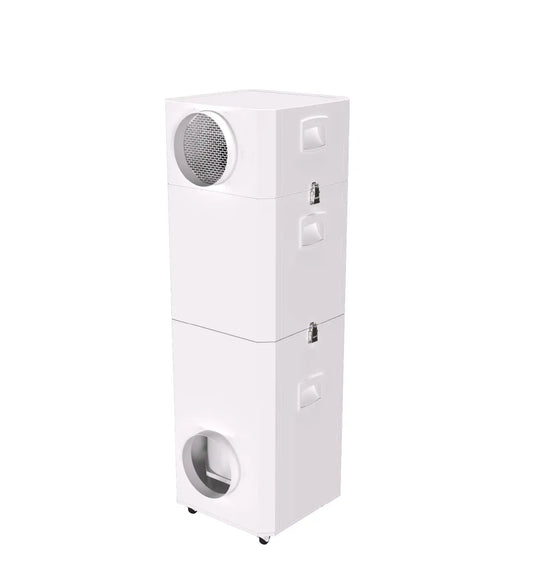
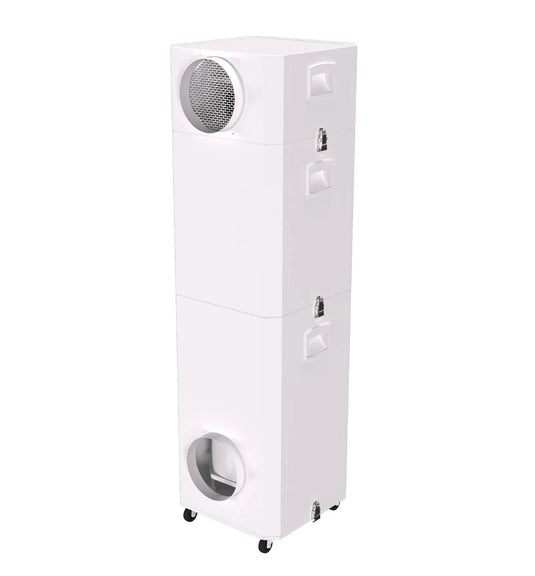
INOVA Elevate Plus – Features a 2.4kg activated carbon filter for addressing odours and gaseous pollutants in smaller spaces.
-
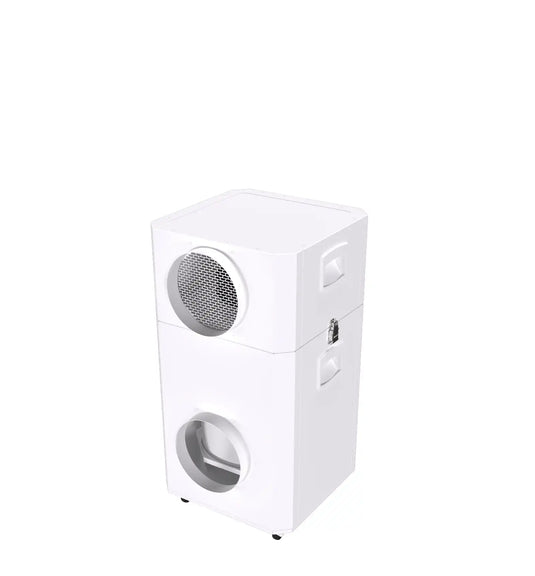
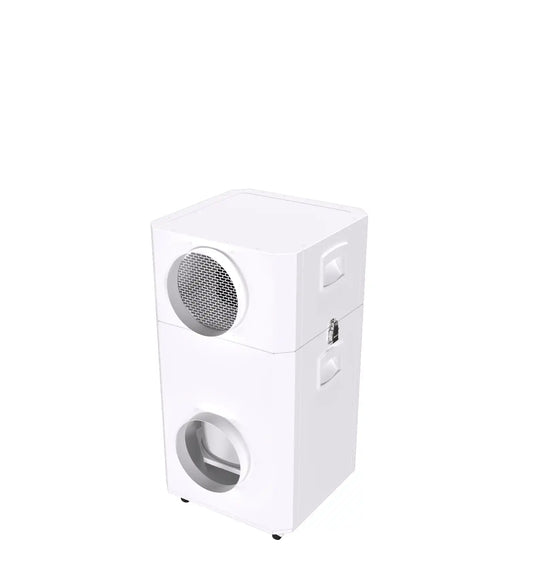
INOVA E20 – Features a heavy-duty 6kg activated carbon filter, designed for larger residential and light commercial environments.
-
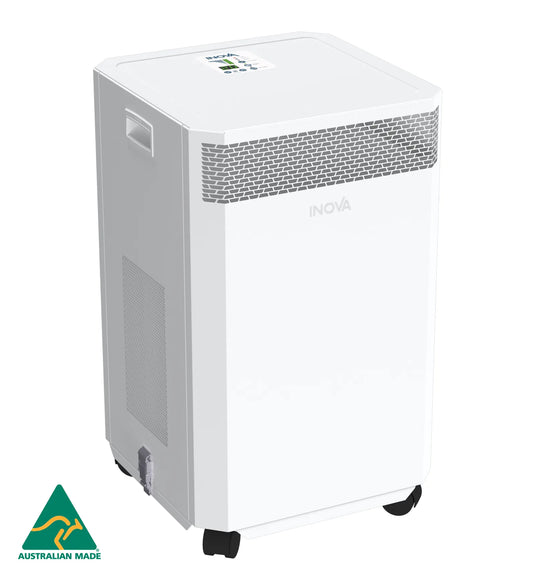
INOVA DE20 – Combines H13 HEPA filtration and a 6kg activated carbon filter with digital airflow and filter monitoring controls.
By combining particle filtration with substantial activated carbon capacity, these systems are designed to help reduce airborne mould spores, certain MVOCs and the unpleasant odours associated with damp environments.
Actual gas-removal performance varies depending on the compounds present, environmental conditions and filter condition.
Can an Air Purifier Prevent Mould or MVOCs?
This is an important distinction.
An air purifier can help reduce airborne MVOCs, but it cannot prevent mould from producing them or stop mould growing on damp surfaces.
Mould thrives in environments where moisture is present. Without addressing the underlying moisture problem, mould can continue growing and releasing spores and MVOCs into the air.
For effective long-term mould management, air purification should be part of a broader strategy:
-
Identify and repair moisture sources. Fix leaking pipes, roof leaks, water intrusion and other sources of dampness.
-
Control indoor humidity. Use appropriate ventilation, air conditioning or dehumidification to reduce excess moisture.
-
Improve ventilation. Use extraction fans in kitchens, bathrooms and laundries to minimise moisture accumulation.
-
Remove existing mould. Clean affected surfaces safely and seek professional remediation for extensive or concealed mould problems.
-
Use an appropriate air purifier. HEPA and activated carbon filtration can help reduce airborne particles, MVOCs and residual odours while the underlying problem is being addressed.
Air purifiers are not dehumidifiers and should never be considered a replacement for moisture control or professional mould remediation.
Choosing the Right Air Purifier for Mould-Related Air Pollution
If mould spores and MVOCs are a concern in your home or workplace, it's important to look beyond basic air purifier specifications.
Choosing a system with both high-efficiency HEPA filtration and substantial activated carbon capacity provides a more comprehensive approach to managing airborne particles and certain gaseous pollutants.
An appropriately sized purifier with sufficient airflow, well-sealed filters and a suitable maintenance schedule can help improve indoor air quality as part of an ongoing mould management strategy.
Cleaner Air Starts with the Right Filtration
Mould-related indoor air pollution isn't limited to what you can see.
MVOCs can contribute to persistent musty odours, while airborne mould spores can create additional concerns for people with allergies and respiratory conditions.
Although eliminating moisture and removing existing mould remain the most important steps, effective air purification can provide an additional layer of indoor air quality management.
With medical-grade HEPA filtration and high-capacity activated carbon, INOVA air purifiers are designed to help reduce both airborne mould spores and certain gaseous pollutants, including MVOCs.
Discover how INOVA's Australian-made air purification systems can support a cleaner indoor environment.