Microplastics in the Air: What New Research Reveals About the Air Inside Your Home

When we think about plastic pollution, we often picture discarded bottles, polluted waterways and microplastics in our food. But emerging scientific research is revealing another potential source of exposure — the air we breathe inside our own homes.
From synthetic carpets and clothing to furniture and household dust, microscopic plastic particles can become airborne during everyday activities. And because we spend so much of our time indoors, researchers are increasingly investigating what this means for our long-term health.
Recent studies have uncovered some surprising findings about the number of microplastics potentially entering our respiratory systems. The good news? There are practical steps you can take to help reduce airborne particle exposure at home.
Scientists Estimate We Could Inhale Thousands of Microplastics Every Day
A 2025 study published in PLOS ONE investigated airborne microplastics in homes and car interiors, focusing on particles measuring just 1–10 micrometres in diameter.
Researchers found median concentrations of approximately 528 microplastic particles per cubic metre of air in residential environments, compared with 2,238 particles per cubic metre inside car cabins.
By combining their measurements with previously published research, they estimated that adults could inhale approximately 68,000 microplastic particles per day in the 1–10 micrometre size range while indoors.
Importantly, this figure is a research estimate rather than a direct measurement of every person's exposure. Actual exposure varies according to the environment, activities and particle concentrations.
Nevertheless, the findings highlight just how widespread airborne microplastics may be — and why researchers are paying closer attention to indoor air quality.
Where Do Airborne Microplastics Come From?
You don't need to live near a factory or industrial area to encounter microplastics.
Many everyday household materials contain synthetic polymers that can release microscopic fibres and fragments as they age, wear or experience friction.
Common potential sources include:
- Carpets and rugs: Synthetic fibres can become detached through regular foot traffic, vacuuming and general wear.
- Curtains and upholstery: Polyester and other synthetic fabrics may release tiny fibres into household dust and air.
- Clothing and bedding: Everyday movement, washing and handling synthetic textiles can contribute to microfibre shedding.
- Plastic household products: Wear and deterioration of plastic materials can generate small fragments.
- Outdoor pollution: Airborne particles originating outdoors can also enter through doors, windows and ventilation systems.
A 2024 study published in Air Quality, Atmosphere & Health examined indoor air in seven homes and identified numerous microplastic types, including fibres and fragments.
The researchers highlighted the importance of synthetic textiles, carpets, sofas and curtains as potential contributors to indoor microplastic contamination.
Once released, some particles settle on surfaces while others remain suspended in the air or become airborne again when disturbed.
This means that even homes that appear clean may contain microscopic airborne particles that are impossible to see with the naked eye.
Can Airborne Microplastics Reach Our Lungs?
The possibility of inhaling microplastics is more than theoretical.
In a 2022 study published in Science of the Total Environment, researchers at the University of Hull investigated human lung tissue samples using advanced analytical techniques.
They identified 39 microplastic particles across 11 of the 13 tissue samples examined, including particles detected in deeper regions of the lungs.
Commonly identified materials included polypropylene and polyethylene terephthalate (PET), both widely used in consumer products and textiles.
While this was a relatively small study, it provided important evidence supporting inhalation as a possible route of microplastic exposure.
What Does This Mean for Our Health?
Scientists are investigating whether inhaled microplastics may contribute to inflammation, oxidative stress and other biological effects.
However, an important distinction remains: detecting microplastics in the body does not automatically establish that they cause disease.
The World Health Organisation has highlighted significant knowledge gaps concerning the health effects of environmental microplastic exposure, including the influence of particle size, composition and long-term exposure.
Further research is required to establish how everyday exposure relates to specific human health outcomes.
In the meantime, reducing unnecessary exposure to airborne particles is a sensible approach to improving indoor air quality.
Can Air Purifiers Remove Microplastics from Indoor Air? New Research Offers Encouraging Evidence
Until recently, much of the research into microplastics focused on identifying where particles were found rather than examining practical ways to reduce them.
A 2026 study published in Environmental Pollution investigated how an air cleaner affected airborne microplastic concentrations in a real indoor office environment.
Researchers compared indoor and outdoor microplastic concentrations under different ventilation and air-cleaning conditions.
They found that using an air cleaner was associated with lower indoor-to-outdoor microplastic concentration ratios under both open-window and closed-window conditions.
The study also demonstrated that ventilation arrangements and the use of electric fans could influence air-cleaning performance.
The key finding: Air cleaning can help reduce airborne microplastic concentrations, although effectiveness depends on the surrounding environment and how the equipment is used.
While the researchers did not evaluate INOVA products specifically, their findings provide additional scientific support for using air filtration as part of a broader strategy to reduce indoor particulate pollution.
How HEPA Filtration Helps Capture Airborne Microplastics
Not all air purifiers use the same filtration technology.
High-Efficiency Particulate Air (HEPA) filtration is designed to capture microscopic airborne particles as air passes through a dense network of filter fibres.
Rather than relying on a simple sieve, HEPA filters capture particles through several physical mechanisms, including interception, impaction and diffusion.
This makes high-efficiency particulate filtration particularly relevant to airborne microplastics, which can occur across a wide range of particle sizes.
INOVA air purifiers incorporate medical-grade H13 HEPA filters, designed to capture extremely fine airborne particles, including dust, allergens and particles within the size range of many airborne microplastics.
Because an air purifier only captures particles that reach and pass through its filtration system, choosing an appropriately sized unit and operating it regularly are important considerations.
It's also worth remembering that HEPA filtration does not remove microplastics already settled on household surfaces or eliminate their sources.
For more information, read our article on the science behind HEPA filters.
Why Choose an INOVA Air Purifier for Your Home?
At INOVA, we believe cleaner indoor air begins with high-quality filtration, reliable engineering and a commitment to long-term performance.
Our Australian-made air purifiers combine several important features:
High-capacity H13 HEPA filtration
INOVA uses generously sized H13 HEPA filters designed for effective capture of microscopic airborne particles.
Multi-stage filtration
A high-efficiency pre-filter captures airborne dust and larger particles before air reaches the main HEPA filter, helping protect its performance.
Continuous air purification
INOVA systems are engineered for ongoing operation, helping continually filter airborne particles as household activities introduce or redistribute them.
Ozone-free operation
INOVA air purifiers are designed to operate without producing ozone, avoiding the introduction of this additional indoor air pollutant.
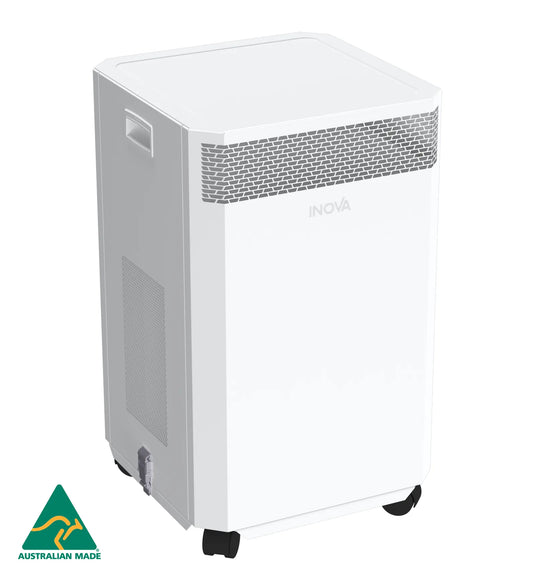
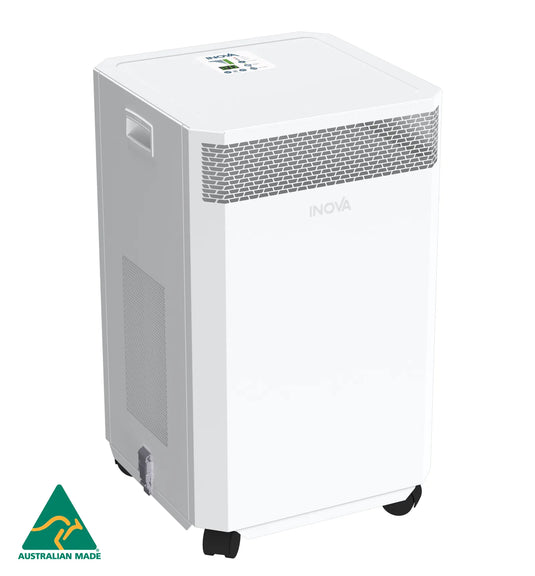
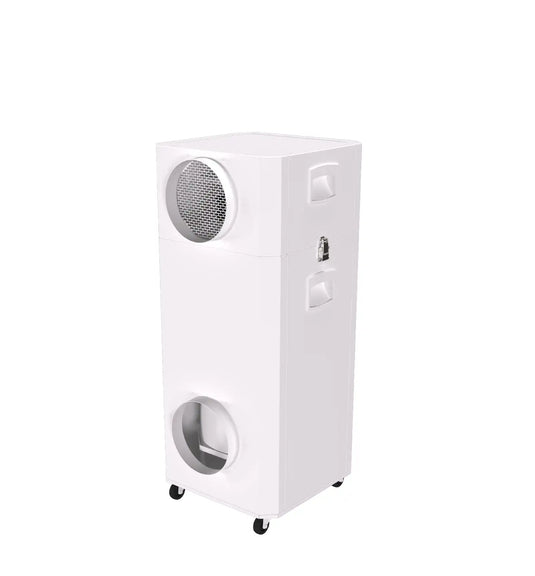
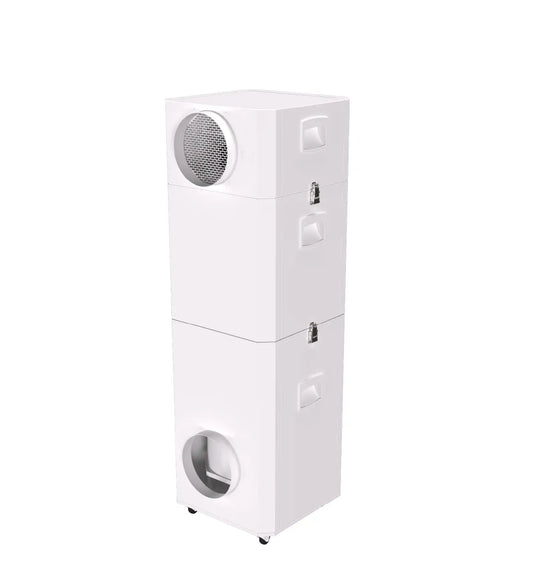
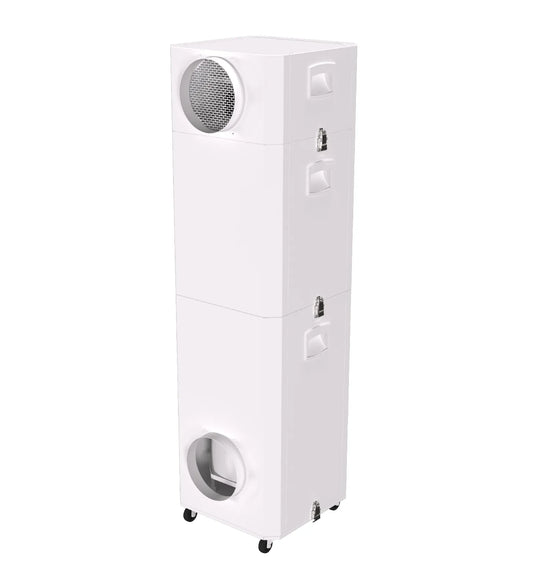
For bedrooms, home offices and smaller living spaces, the INOVA Elevate offers H13 HEPA filtration in a compact, Australian-made unit.
The INOVA Elevate Plus combines H13 HEPA filtration with a substantial activated carbon filter for households also concerned about odours and certain gaseous pollutants.
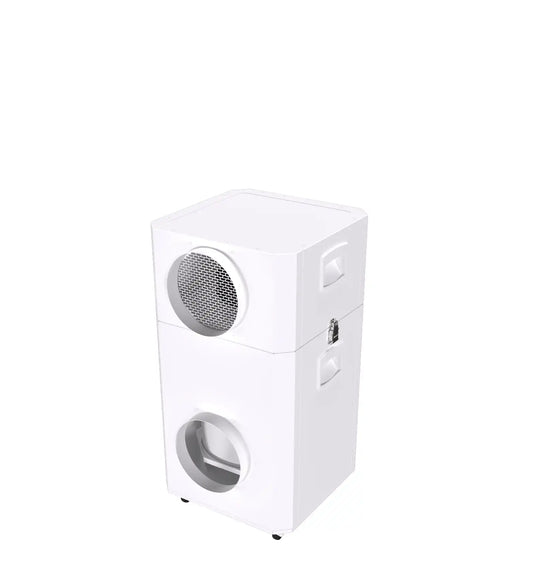
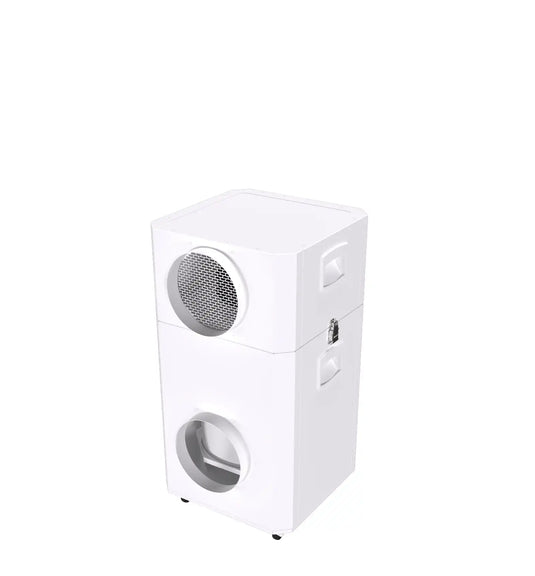
For larger living areas, explore our full range of INOVA home air purifiers.
Activated carbon targets certain gases and odours; HEPA filtration is the principal technology relevant to capturing airborne microplastic particles.
Five Practical Ways to Reduce Microplastics in Your Home
While scientists continue to investigate microplastic exposure, several everyday actions can help reduce indoor airborne particles.
- Clean household dust regularly. Use a vacuum cleaner equipped with effective HEPA filtration and clean hard surfaces with a damp cloth to avoid unnecessarily dispersing settled dust.
- Consider your household textiles. Where practical, choose durable, lower-shedding materials and consider natural-fibre alternatives when replacing carpets, curtains or bedding.
- Ventilate when outdoor air quality is good. Fresh-air ventilation can help dilute indoor pollutants, although opening windows may not be appropriate during bushfire smoke events or periods of high outdoor pollution.
- Use an appropriately sized HEPA air purifier. Place a high-efficiency air purifier in areas where you spend significant time, such as bedrooms and living rooms. Consistent operation provides more opportunities for airborne particles to pass through the filter.
- Maintain your filtration equipment. Follow the manufacturer's recommended maintenance schedule. Clean pre-filters and replace filters when necessary to maintain effective operation.
Combining good cleaning habits, sensible material choices, ventilation and air filtration offers a more comprehensive approach than relying on any single measure.
Cleaner Indoor Air Starts with Understanding What We Breathe
Research into airborne microplastics is developing rapidly.
We now have evidence that microplastics are present in indoor air, that some can reach human lung tissue, and that air cleaning can help lower their concentrations under certain conditions.
Although scientists are still establishing the long-term health implications, these findings reinforce the importance of understanding and managing the invisible particles in our indoor environments.
You may not be able to eliminate every source of microplastics, but you can take practical steps to reduce airborne particulate pollution.
Take a proactive approach to indoor air quality with Australian-made INOVA HEPA air purifiers.
Explore the INOVA Air Purifier Range
References
- Yakovenko et al. (2025). Human exposure to PM10 microplastics in indoor air. PLOS ONE.
- Yeh & Jung (2026). Impact of air cleaner on indoor microplastic pollution in a real indoor environment. Environmental Pollution.
- Bhat (2024). A comprehensive characterisation of indoor ambient microplastics in households during the COVID-19 pandemic. Air Quality, Atmosphere & Health.
- Jenner et al. (2022). Detection of microplastics in human lung tissue using μFTIR spectroscopy. Science of the Total Environment.
- World Health Organisation (2022). Dietary and inhalation exposure to nano- and microplastic particles and potential implications for human health.
- INOVA blog post (2025). Breathe Easier: Protecting Your Lungs from the Invisible Threat of Airborne Microplastics