HEPA vs. Electrostatic Air Purifiers: Why Medical-Grade Wins

In the world of air purification, a common debate often arises: Should you choose the convenience of a "washable" electrostatic filter or the proven performance of medical-grade HEPA?
At INOVA, we believe in air purification without compromise. While some brands market Electrostatic Precipitator (ESP) technology as a "sustainable" alternative to filters, the scientific reality is that ESP technology is significantly inferior to medical-grade H13 HEPA filtration in three critical areas: safety, consistent efficiency, and total pollutant removal.
Here is why choosing an electrostatic purifier over a medical-grade HEPA system could be a mistake for your health.
1. The "Hidden" Danger: Ozone Production
The most significant drawback of Electrostatic Precipitators is their mechanism. They work by using high-voltage wires to "charge" incoming particles, which then stick to metal plates.
The Problem: This high-voltage process naturally creates ozone (O3) as a byproduct. Ozone is a known lung irritant that can trigger asthma attacks, cause chest pain, and permanently damage lung tissue.
Even if a device claims to be "ozone-safe," the chemical reaction is inherent to the technology. In contrast, INOVA’s H13 HEPA filters are 100% mechanical. They trap particles in a dense web of fibres without any electrical charging, meaning they produce zero ozone and zero secondary pollutants.
2. Efficiency: The "Clean Plate" Myth
Electrostatic purifiers often boast high efficiency in their marketing materials. However, this efficiency is only achievable when the collector plates are perfectly clean.
-
ESP Reality: As soon as a thin layer of dust coats the metal plates, the electrostatic bond weakens. This causes "blow-off," where particles are no longer captured and are instead blown back into your room. To maintain even a baseline level of performance, you must wash the plates constantly—often every few days in a dusty environment.
-
HEPA Reality: A medical-grade HEPA filter actually becomes more efficient as it captures particles. The trapped dust helps snag even smaller particles through a process called "interception." With an INOVA system, you get certified 99.95% efficiency from the first minute to the last.
3. Particle Capture: Trapping vs. Spreading
Electrostatic technology relies on a "charge" to pull particles toward a plate. If a particle is moving too fast or doesn't receive enough of a charge, it simply passes through the machine.
Furthermore, many electrostatic devices act as "ionizers." This means they charge particles and release them back into the room, hoping they stick to your walls or furniture. This doesn't remove the pollutant; it just moves it from the air to your floor (or worse, makes it "sticky" so it attaches to the lining of your lungs).
Medical-grade H13 HEPA is a physical barrier. Once a virus, bacteria, or smoke particle enters an INOVA purifier, it is trapped for good within the filter media. It cannot be "unstuck" or blown back out.
4. Why "Washable" Isn't Better
The "no replacement filters" sales pitch is tempting, but it comes at a cost to your air quality. Washing metal plates in a sink is messy and often fails to remove the microscopic "glues" found in smoke and kitchen grease. Over time, these residues build up, permanently degrading the machine’s performance.
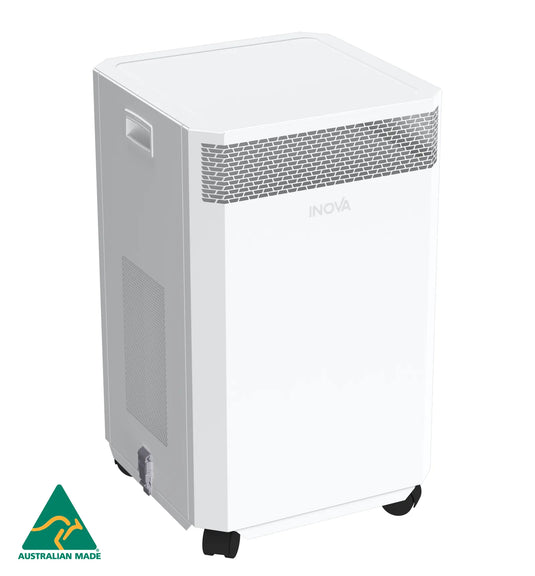
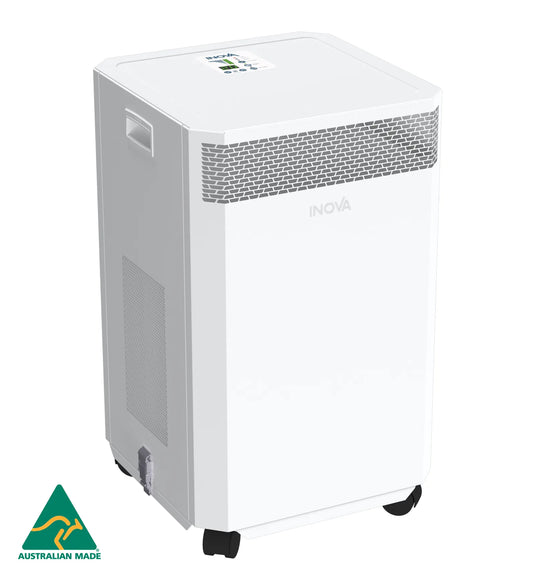
At INOVA, we use high-capacity filters with massive surface areas. Our HEPA filters are designed to last 3 to 5 years, providing medical-grade protection without the weekly chore of scrubbing greasy metal plates.
The Verdict
If you are looking for a gadget, an electrostatic "purifier" might suffice. But if you are looking to protect your family from bushfire smoke, allergens, viruses, and ultra-fine pollution, there is no substitute for the gold standard.
Medical-grade H13 HEPA is the technology of choice for hospitals and laboratories for a reason. It is safer, more reliable, and offers a level of purity that "washable" plates simply cannot match.
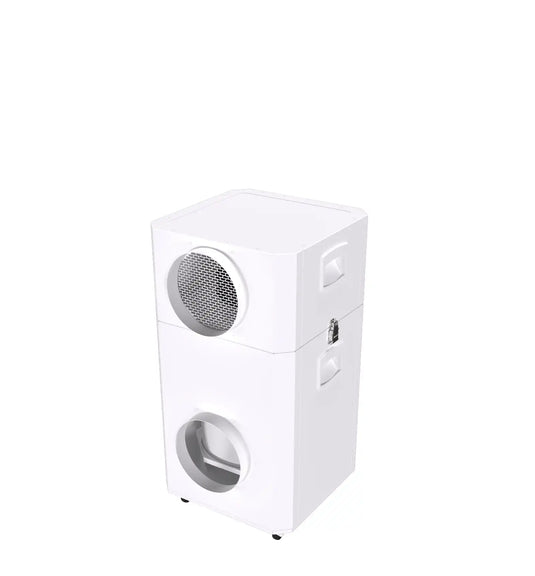
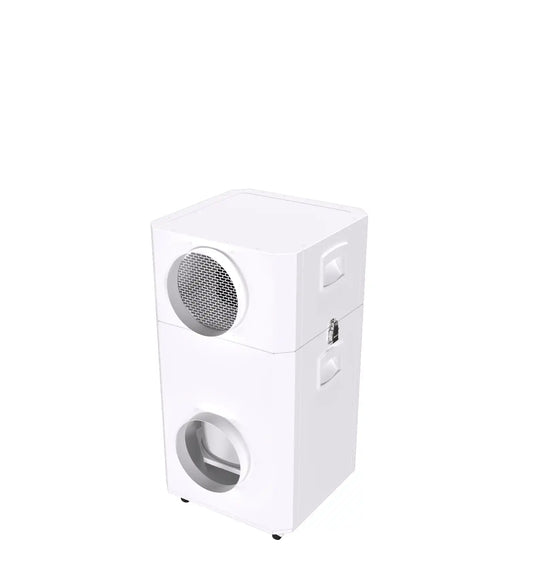
Ready to experience the difference of clinical-level air? Explore the INOVA Range of H13 Medical-Grade Air Purifiers.