Activated Carbon: Why More is Better

As a consumer, when you are looking for an air purifier, you are inundated with specs. CADR ratings, ACH rates, coverage areas, and filter types (HEPA, Activated Carbon, Pre-filter, Ioniser). It’s enough to make anyone’s head spin.
One of the most misunderstood components, and arguably the most crucial for making your home a healthy sanctuary, is the Activated Carbon Filter.
We have a secret to share from inside the industry: while most brands brag about including an "activated carbon filter," the overwhelming majority are barely there. At INOVA, we build our machines differently, and the massive weight of carbon inside is the key to our superior performance.
The Great Carbon Deception: Grams vs. Kilograms
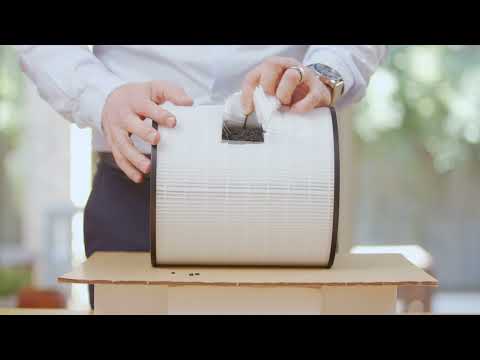
Most air purifiers on the market, even some well-known premium brands, contain what we in the industry refer to as "token" activated carbon. They have a small, thin layer, perhaps just a few grams or a fraction of an inch thick. This is just enough to check a box on a marketing spec sheet, but it's fundamentally insufficient for your home.
When you invest in a solution, you expect it to work. Imagine cleaning a spill with a single, dry paper towel versus a thick, ultra-absorbent sponge. The paper towel gets saturated immediately.
That’s what happens with small carbon filters. They are saturated with chemicals and odours in just a matter of weeks, sometimes days, and from then on, they do nothing.
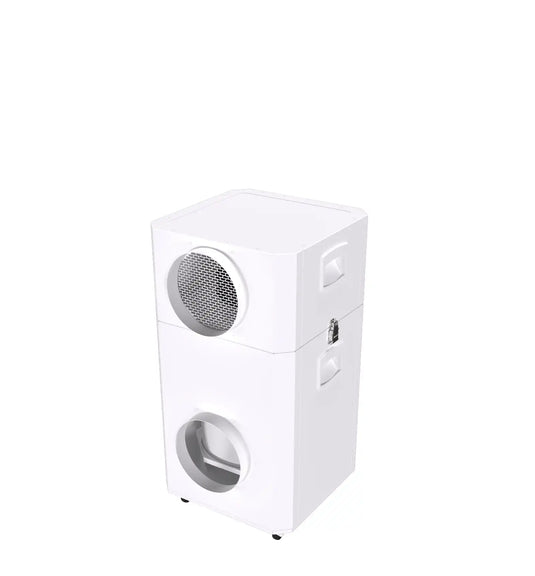
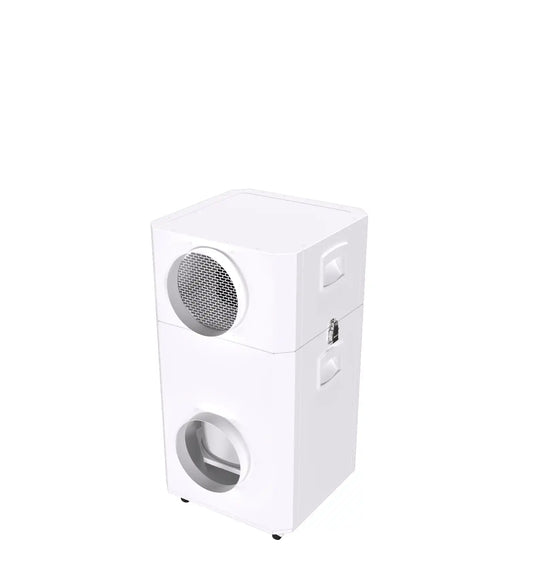
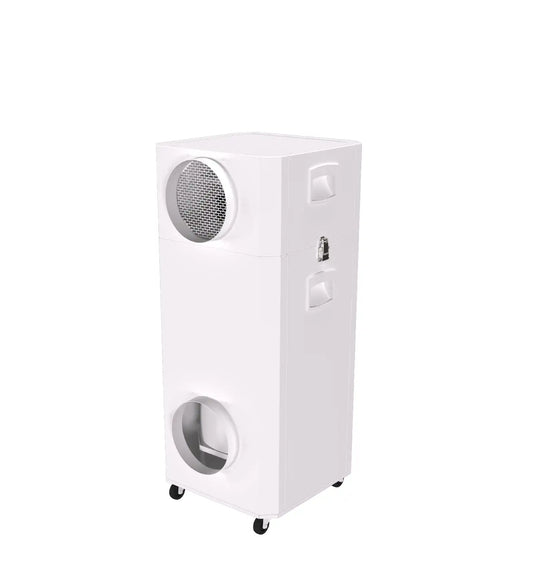
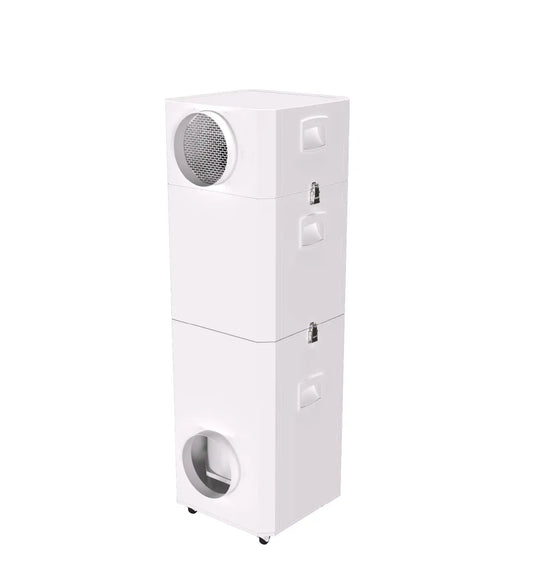
At INOVA, we use kilograms of activated carbon. The high-performance carbon filters inside our purifiers contain up to 6 kilograms of high-grade activated carbon, depending on the model. This is an exponential difference in performance.
Why Does the Amount of Carbon Matter So Much?
Activated carbon is unique. It doesn't filter particles like a HEPA filter. It works through a process called adsorption, which effectively traps gas-phase pollutants.
Understanding Adsorption: The Chemical Trap
Don’t confuse absorption with adsorption. A sponge absorbs water. A magnet adsorbs iron filings.
-
Massive Surface Area: Activated carbon is processed to have countless micropores. These pores create an enormous surface area. To put it in perspective, one gram of activated carbon can have a surface area in excess of 500 square meters—about one-tenth the size of a football field.
-
Molecular Bond: Chemical pollutants and odour molecules are physically attracted to the surface of the carbon through weak molecular forces (Van der Waals forces). As air passes through the carbon bed, these harmful molecules adhere to the pore surfaces and are pulled out of the air.
This is the only way to remove:
-
Volatile Organic Compounds (VOCs): Invisible chemicals emitted from paints, new furniture, flooring, and household cleaners (like formaldehyde and benzene).
-
Strong Odours: Persistent smells from cooking, pets, and smoke.
-
Tobacco and Bushfire Smoke: Complex chemical mixtures that a particle filter cannot stop alone.
-
Chemical Pollution: Urban smog and gases like nitrogen dioxide.
The Limitation of Design: Why Competitors Use "Token" Carbon
So, if kilograms of carbon are necessary, why doesn't every company include them? It’s not a secret; it’s a limitation of their product design.
To effectively utilise a dense carbon filter that weighs kilograms, your air purifier must have a very powerful motor and fan assembly. When air encounters a thick, dense carbon bed, the resistance (or pressure drop) is incredibly high. It requires a significant force to pull the air through.
Most consumer air purifiers are designed with weak, energy-efficient (read: low-power) fans. If you were to place a high-mass INOVA carbon filter into most competitor products, their fans would be completely unable to move the air. They are physically incapable of supporting a serious chemical removal stage.
By designing our machines with medical-grade components, including high-pressure centrifugal fans and powerful motors, we can utilise the dense filters needed for total air purification.
The INOVA Difference: Breathe Clean Air, Not just Particle-Free Air
Choosing an air purifier without significant activated carbon is a half-measure. You are removing dust and pollen, but you are leaving behind the chemical soup that we all breathe in every day.
By committing to kilograms, not grams, INOVA ensures that your air is not only free of airborne particles but also truly fresh, odour-free, and safe from chemical pollutants. When you buy an INOVA, you are investing in real, sustainable air quality for your home and family.
What's Really Inside Most Air Purifiers' Carbon Filters?