Bushfire Smoke and Pregnancy: Why Cleaner Indoor Air Matters More Than Ever

Bushfire smoke has long been treated as a short-term inconvenience: close the windows, stay indoors, wait for the haze to pass.
But as Australia faces longer, more intense and less predictable fire seasons, the conversation around smoke exposure is changing. Bushfire smoke is no longer just an outdoor problem. It is an indoor air quality issue, a public health issue, and for some families, a deeply personal concern.
A recent ABC News article, Mothers fear children’s chronic illnesses are linked to bushfire smoke during pregnancy, explored a confronting question: what does bushfire smoke do to babies in the womb?
The article reflects on the Black Summer bushfires and the experiences of mothers who were pregnant while smoke blanketed parts of Australia. It also highlights emerging research into the possible impacts of smoke exposure during pregnancy, including concerns around preterm birth, low birth weight, asthma and other long-term health outcomes.
While the science is still developing, one message is already clear: reducing exposure to bushfire smoke matters, especially for vulnerable groups.
Why bushfire smoke is different from everyday air pollution
Bushfire smoke is made up of a complex mixture of gases and tiny particles. One of the biggest concerns is fine particulate matter, commonly known as PM2.5.
These particles are so small they can travel deep into the lungs. From there, research shows fine particles can enter the bloodstream and affect different parts of the body.
The ABC article also references growing evidence that particles from polluted air can reach placental tissue, raising important questions about how smoke exposure may affect unborn babies during critical stages of development.
For pregnant women, babies, young children, older people and anyone with asthma or respiratory conditions, smoke exposure can pose a greater risk.
The problem with “just staying indoors”
During bushfire events, public health advice often includes staying indoors, keeping windows closed and avoiding outdoor activity.
That advice is important, but it may not be enough on its own.
Anyone who lived through the Black Summer bushfires will remember that smoke did not always stay outside. It seeped into homes, offices, hospitals and childcare centres. You could smell it in bedrooms, see it under lights and feel it in your throat.
This is the challenge with bushfire smoke: even when doors and windows are closed, fine particles and gases can still enter indoor spaces.
That is why indoor air quality needs to be part of every bushfire smoke plan.
Creating a cleaner air room at home
One practical step households can take during smoke events is to create a cleaner air room.
This means choosing one room in the home, usually a bedroom or living area, and making it the cleanest possible indoor space during periods of poor outdoor air quality.
To help reduce smoke entering and circulating through the home:
- Keep windows and external doors closed
- Use air conditioning on recirculate mode where possible
- Avoid using exhaust fans unnecessarily, as they can draw smoky air inside
- Avoid indoor smoke sources such as candles, incense and wood heaters
- Run a high-quality air purifier suited to the room size
- Check local air quality alerts and follow health advice from authorities
For families with pregnant women, babies or children with asthma, having a cleaner air room can provide added peace of mind when outdoor air quality deteriorates.
Why HEPA and activated carbon filtration matter
Not all air purifiers are designed for bushfire smoke.
Bushfire smoke contains both fine particles and gaseous pollutants. That means an effective air purifier should do more than move air around the room.
A quality purifier for smoke should include:
-
Medical-grade HEPA filtration
HEPA filtration is designed to capture fine airborne particles, including smoke particles, dust, allergens and other microscopic pollutants.
-
High-capacity activated carbon
Activated carbon helps adsorb gases, odours and smoke-related vapours. For bushfire smoke, carbon capacity matters. Small amounts of carbon may not provide the same level of performance as a purifier designed with a substantial carbon filter.
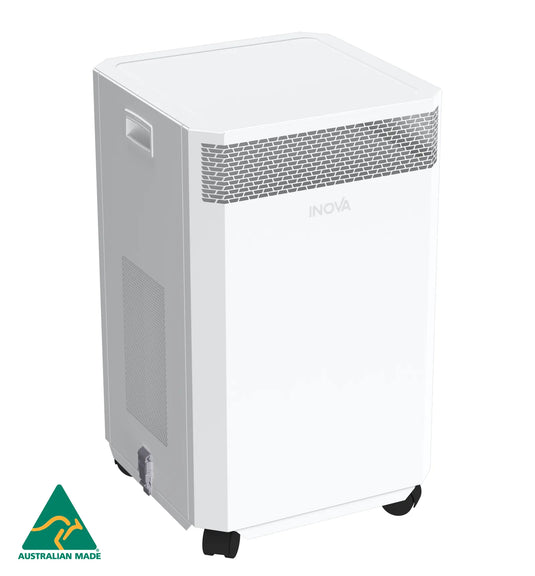
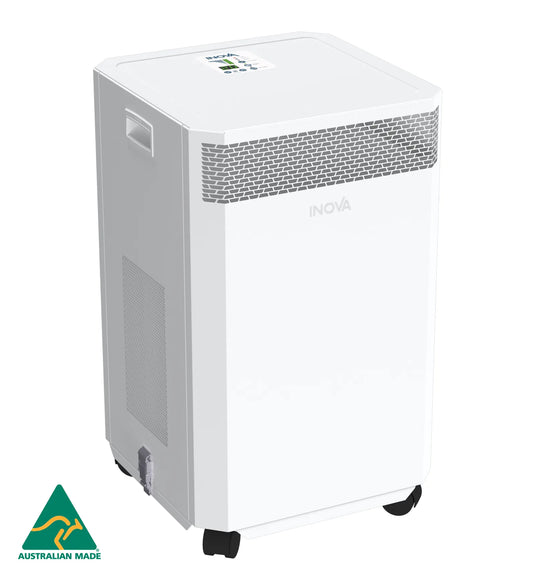
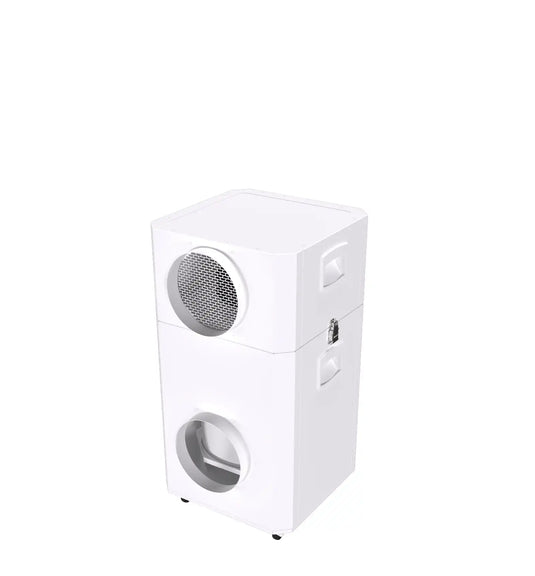
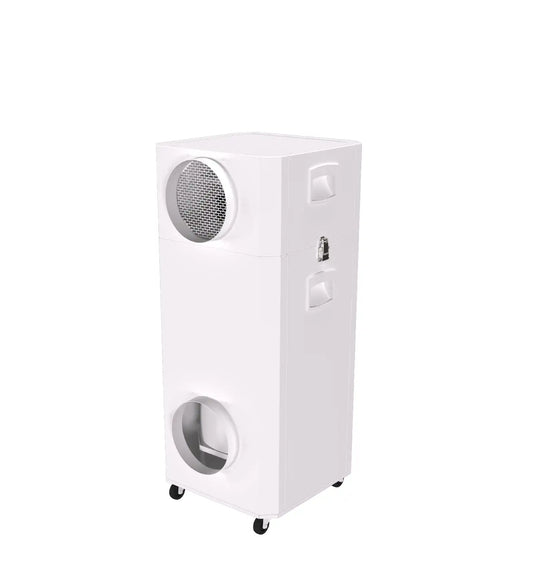
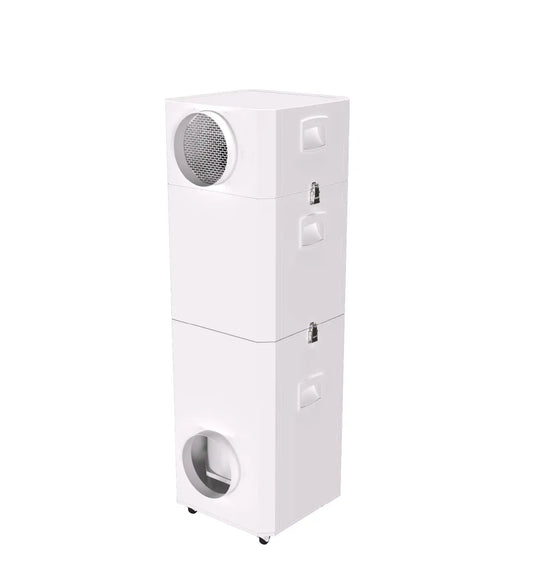
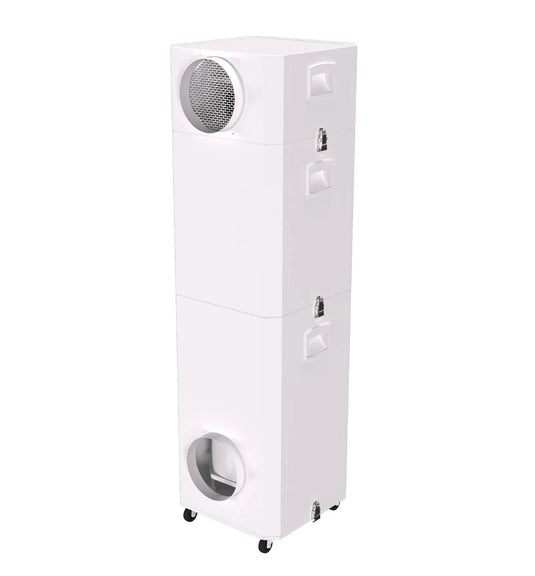
INOVA Air Purifiers are built with medical-grade H13 HEPA filters and high-capacity activated carbon filters, making them well-suited to Australian homes affected by bushfire smoke, traffic pollution, wood heater smoke and other airborne contaminants.
Cleaner air is not just for fire season
The ABC article makes an important point: as the climate changes, bushfire smoke may become a more frequent and far-reaching health concern.
Smoke from regional fires can travel hundreds of kilometres, affecting major cities and suburbs far from the fire front. This means households that may not consider themselves at direct bushfire risk can still experience hazardous smoke pollution.
Preparing early is key.
A high-quality air purifier is not something most people want to be researching when the smoke has already arrived and stock is limited. For families with young children, pregnant women, asthma sufferers or elderly relatives, it makes sense to plan ahead.
A practical step toward healthier indoor air
No air purifier can control outdoor conditions. And no single product can remove every risk associated with bushfire smoke.
But cleaner indoor air can play an important role in reducing exposure.
As research continues into the long-term health impacts of bushfire smoke, especially for unborn babies and young children, Australian households have an opportunity to take practical steps now.
Creating a cleaner indoor environment is one of them.
With Australian-made construction, medical-grade H13 HEPA filtration and high-capacity activated carbon, INOVA Air Purifiers are designed to help remove smoke particles, odours and airborne pollutants from indoor air.
When the air outside becomes unsafe, the air inside your home matters more than ever.
Prepare your home before the next smoke event
Explore INOVA Air Purifiers designed for bushfire smoke and create a cleaner air space for your family this fire season.